You Don't Have to Feel This Alone Anymore
Learn The HOME Recovery Method™ for postpartum healing when your family is far away
Yes, I Want Postpartum Depression & Recovery for Diaspora Mothers — $3.99 Secure payment. Instant digital delivery.The Story Behind This Guide
I remember the exact moment I realized something was deeply, profoundly wrong. My baby was three weeks old. I had done everything right—I'd read every book, taken prenatal classes, prepared my home, built my confidence. But none of that prepared me for the overwhelming weight of loneliness that hit me like a physical force.
I couldn't call my mother. She was 5,000 miles away in a different time zone. My siblings? Scattered across three continents. The people I normally turned to when life got hard—the ones who knew me intimately, who understood my family's way of doing things, who would have held me while I fell apart—they couldn't be there. They couldn't hold my baby. They couldn't sit with me on the hard days. They couldn't make the traditional meals or whisper prayers or do the things that would have been automatic if I'd given birth at home.
Instead, I was alone in a foreign country with a partner who loved me but didn't understand, with no family nearby, with no one who shared my cultural background, my language nuances, my way of being in the world. The particular kind of exhaustion that comes with being a new mother far from everyone who raised you is something I can't adequately describe to someone who hasn't lived it.
I told myself I should be grateful. I should be happy. I had a healthy baby—a miracle, really. I had a partner who wanted to help. I lived in a safe country with access to healthcare. By every objective measure, I was blessed. But gratitude doesn't erase loneliness. It doesn't stop the guilt that whispers at 2 AM: "Something is wrong with you. Other mothers aren't struggling like this. Other mothers have their families. Other mothers know what they're doing."
For months, I spiraled. I didn't know what postpartum depression was. I didn't know that what I was feeling had a clinical name, a recognized pattern, a path to recovery. I didn't know that there were thousands—millions—of other mothers in this exact position, feeling exactly what I felt. I thought I was the only one. I thought something was fundamentally broken in me.
I spent countless hours on forums looking for someone—anyone—who understood what it meant to be a diaspora mother struggling with postpartum emotional challenges. I read blog posts written by women in the US who had their mothers visiting for six months after birth. I watched YouTube videos of mothers with extended family nearby, dropping by to help. I read advice columns that assumed you had a "village"—but the village was your immediate family, your childhood friends, your parents' church. Nothing felt like my reality.
I tried the advice everyone gave me. "Just sleep when the baby sleeps." (My baby didn't sleep.) "Get more support from your family." (They lived on another continent.) "You need to be stronger." (Strength and suffering are not the same thing.) "Other mothers have it harder." (This didn't help.) "Just think about your baby and smile." (I was thinking about my baby constantly—that was part of the problem.)
Each suggestion made me feel worse, not better. Because none of them addressed the core truth of my situation: I was isolated, and no amount of willpower, positive thinking, or gratitude was going to change that fundamental fact. I needed something real. I needed to understand what I was experiencing. I needed to know I wasn't alone. I needed a path forward that acknowledged my reality instead of denying it.
Then I found something that changed everything.
The Real Problems Diaspora Mothers Face
These aren't theoretical challenges. These are the lived experiences of mothers like you, every single day.
The Distance Problem
Your parents can't come. Your siblings can't visit. The people who know you best can't be there. You're managing a newborn without your lifelong support system, and the emotional weight of that is real.
The Loneliness Problem
You don't share a cultural background with most people around you. You don't have a church family, a neighborhood of relatives, or childhood friends nearby. You're building from scratch while recovering from birth and adjusting to motherhood.
The Cultural Problem
The parenting advice doesn't match your values. The postpartum expectations don't match your culture. People don't understand why you're not calling your mother (because she's sleeping) or why you can't just "get family help" (because they're not here).
The Identity Problem
You're trying to be a good mother in a culture that isn't yours, maintain your own cultural identity, honor your family's expectations from afar, and process your own emotional wellbeing. That's four jobs, not one.
You've tried pushing through. You've told yourself to be strong, to be independent, to prove you can do this alone. But strength and isolation are not the same thing. You can be a strong person and still need support. You can be independent and still need a village. These aren't contradictions—they're just truth.
Why Everything Else Has Failed
Generic Postpartum Guides
They assume you have family nearby. They mention your "village" without realizing your village is 5,000 miles away. They give advice that only works if you have the support system they're describing.
Online Therapy
It's expensive. There are waiting lists. Many therapists don't understand the specific challenges of diaspora motherhood. Time zones make scheduling difficult. You're paying for something you can barely afford while exhausted.
Your Mother's Advice
She didn't talk about these feelings in her time. The postpartum experience has changed. Cultural expectations have shifted. Her generation didn't have language for this. Her advice, while loving, doesn't fit your reality.
Support Groups
They might not exist in your area. Online groups might not understand your specific experience. You're looking for mothers who are diaspora, postpartum, and struggling—a specific combination that's hard to find.
Pushing Through Alone
This is what most diaspora mothers do. They manage, they cope, they survive. But survival isn't healing. And months of just coping takes a toll on your mental health, your relationship, and your bonding with your baby.
Waiting for Time to Fix It
Yes, postpartum depression usually improves over time. But the average is 9+ months without intervention. That's 9+ months of your baby's critical early development with a mother who is struggling. That's unnecessary.
The Numbers Behind Postpartum Struggle
Experience postpartum depression
This rate is significantly higher for mothers without family support.
Don't seek help in year one
Shame, isolation, and not knowing where to turn are the main reasons.
Average improvement without intervention
With support, healing can begin in weeks, not months.
Struggle with the mother-infant bond
When postpartum depression goes untreated, this critical relationship suffers.
The HOME Recovery Method™ Explained
A four-step framework built from research and real recovery stories.
H — Hear Yourself
The first and most important step. You've been taught to dismiss your feelings, to tell yourself you're being dramatic, to push through. This step teaches you to listen to yourself with the same compassion you'd offer a friend. When you name your emotions, you stop their power to control you in secret. "I feel lonely" is very different from unnamed dread. "I'm overwhelmed" gives you a place to start. This step takes 2-3 hours but shifts your entire framework.
O — Open Your Support Circle
You don't have your birth family, but you have people around you right now. This step helps you identify them: the trusted friend, the friendly neighbor, the online community, the therapist, the doctor. You'll map your actual support system and learn to ask for what you need. It sounds simple, but asking for help is a learned skill. This step takes 1-2 weeks of active work and completely changes your access to support.
M — Make Recovery a Priority
Recovery happens through small, consistent actions, not dramatic changes. This step gives you realistic practices that fit into your actual life. Not a spa day (when will that happen?), but a 10-minute walk. Not a week of meditation (who has time?), but 3 minutes of breathing. These tiny actions, done consistently, create real change. This step takes 2-4 weeks to build new habits and generates noticeable shifts in your mood and energy.
E — Establish Your New Normal
You're not going back to your old life. You're creating a new one that honors your identity as both a diaspora mother and a person recovering from postpartum challenges. This final step cements everything into a sustainable system. By the end of this step (weeks 4-8), you have a clear, personalized plan that will support your recovery long-term—not just for the next few months, but for years.
This method works because it doesn't pretend your situation is different than it is. It doesn't tell you to "just relax" or "ask your mother for help." It meets you exactly where you are and builds from there.
Inside This Complete Guide
Everything you need to understand postpartum struggle, build your support system, and begin healing—all in one resource designed specifically for you.
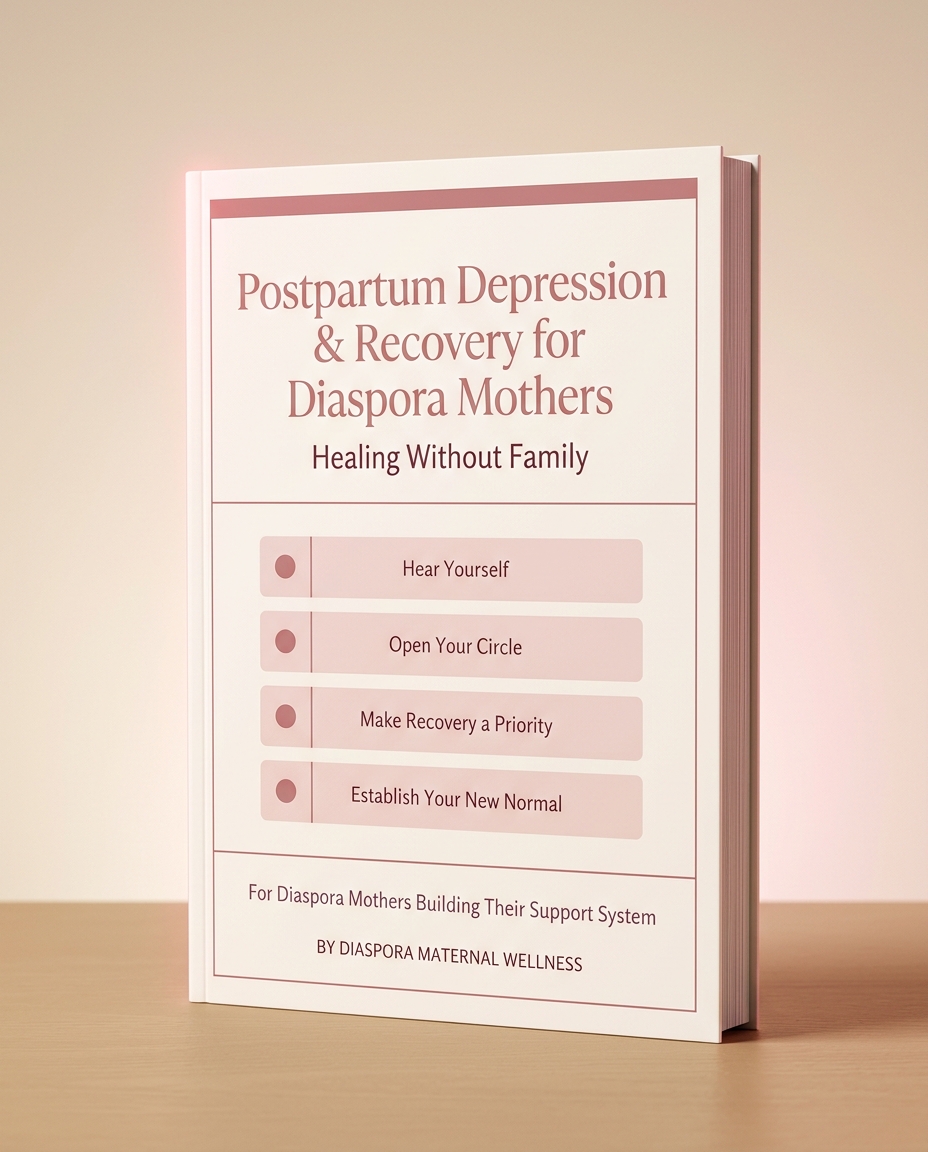
Postpartum Depression & Recovery for Diaspora Mothers
Healing Without Family
What's Inside: 8 Chapters of Real Help
Your Complete Toolkit
Beyond the guide, you also receive three practical worksheets that make recovery actionable:
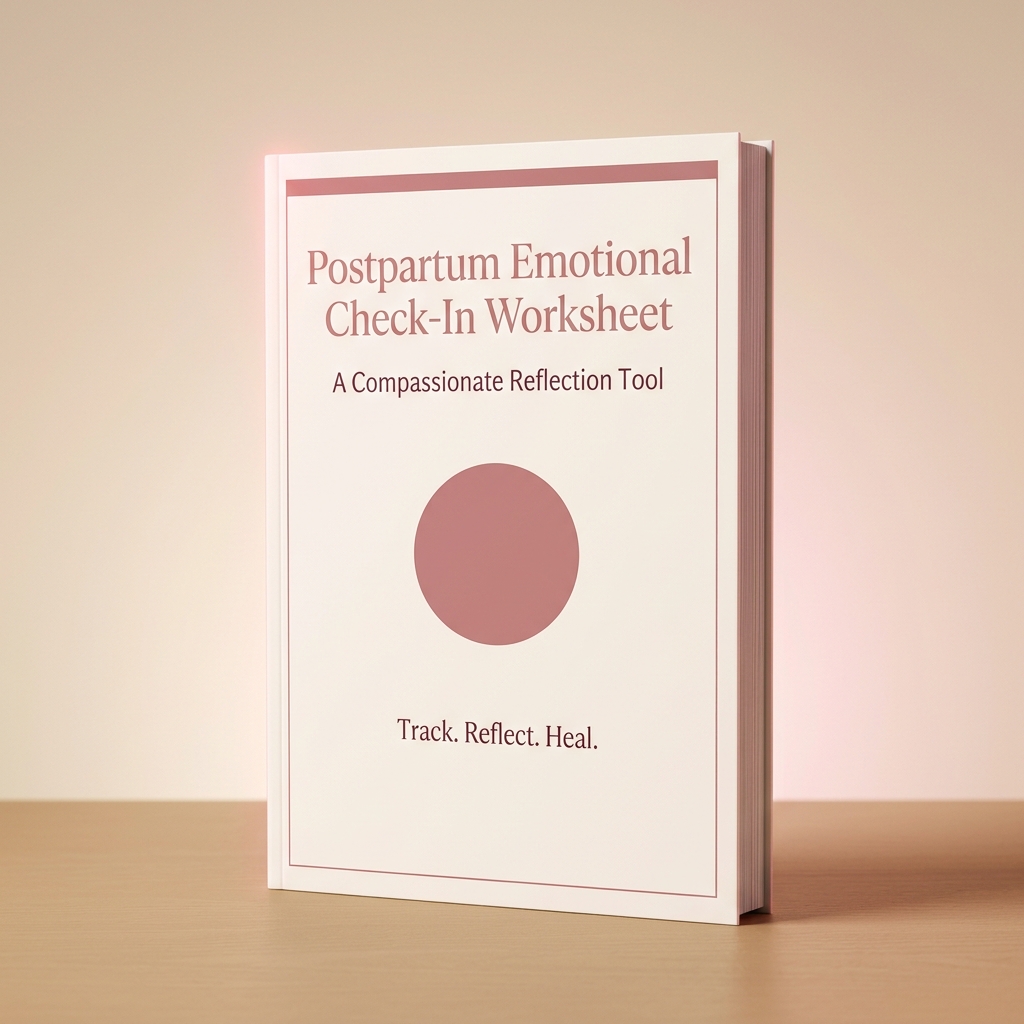
Bonus 1: Postpartum Emotional Check-In Worksheet
A simple, compassionate worksheet to help you reflect on how you're feeling and identify areas where you may need support. Use it weekly to track your emotional journey, recognize patterns in your wellbeing, and celebrate the progress you're making—even the small wins. Includes 52 weeks of check-in prompts plus space for your own reflections. The act of writing itself is therapeutic.
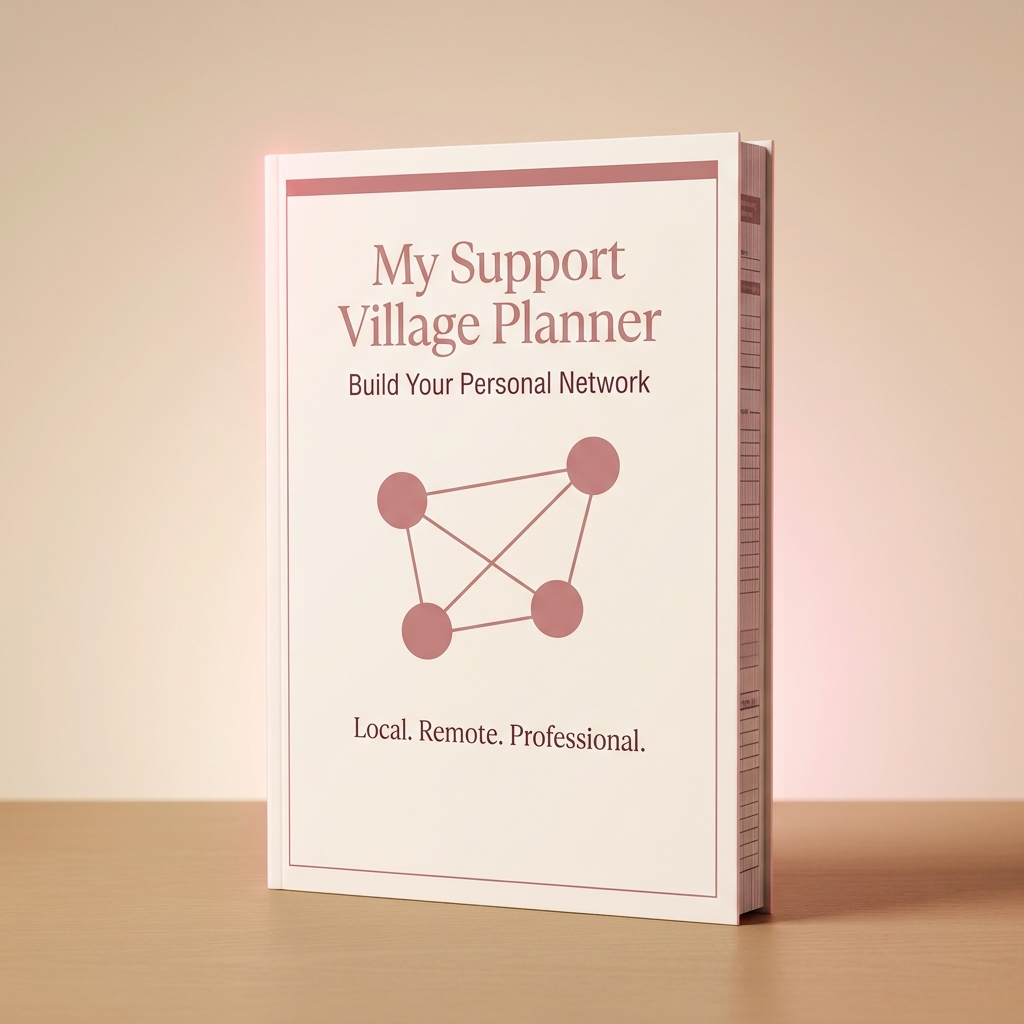
Bonus 2: My Support Village Planner
A practical, interactive worksheet for identifying trusted people, community resources, and professional support available to you locally and remotely. Build your personal support system step by step, and know exactly who to reach out to when you need help. Includes templates for mapping emotional support, practical help, professional guidance, and emergency contacts. Completely customizable to your situation.
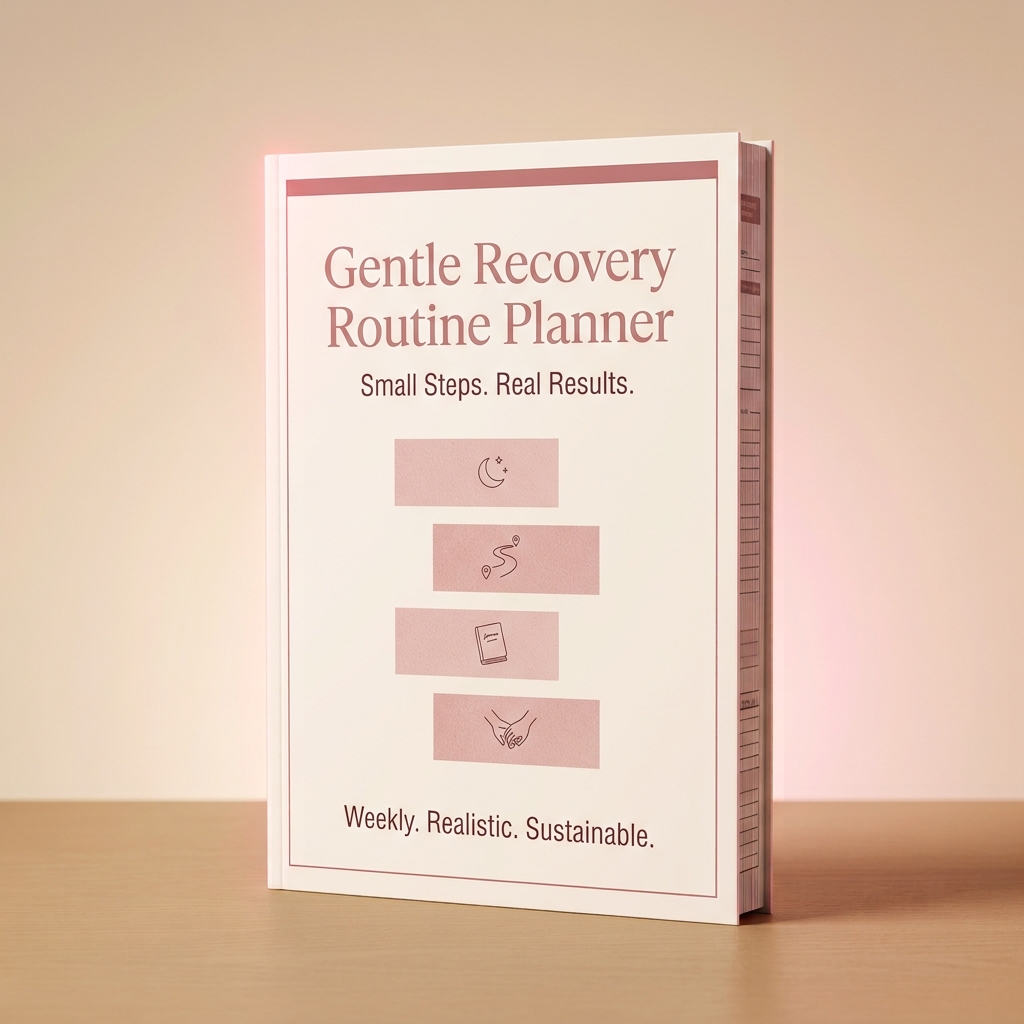
Bonus 3: Gentle Recovery Routine Planner
A realistic weekly planner focused on small, manageable steps rather than trying to do everything at once. Create sustainable routines that honor your recovery and your adjustment to motherhood—routines that actually fit your real life. Includes 12 weeks of guided planning plus daily practice ideas. No guilt-inducing checklists; just genuine practices diaspora mothers can actually sustain.
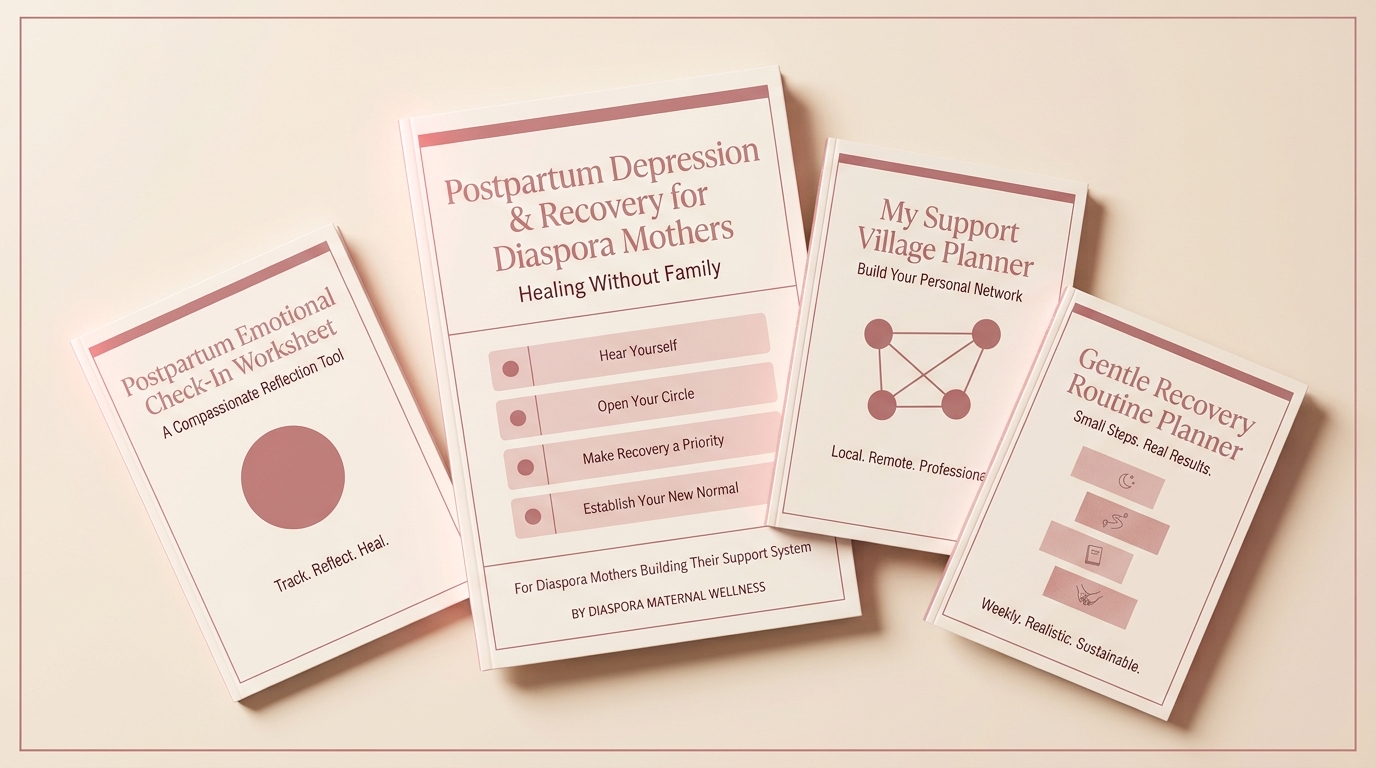
The combined value of the main guide plus all three bonuses is $37.96.
You get everything for just $3.99.
Real Stories From Real Mothers
These are diaspora mothers who were struggling and found their way to healing.
"I felt like I was the only person struggling while everyone else seemed to have motherhood figured out. This resource helped me realize I wasn't broken—I was just alone. The chapter on guilt made me cry because someone finally understood why I felt guilty for struggling when I had a healthy baby. Now I know how to build that village I didn't think I could have. Reading other mothers' stories made me feel less isolated."
"The guilt was drowning me. I couldn't call my parents at 3 AM when I was struggling because they would worry and feel helpless. I had no village. But this guide gave me permission to feel what I was feeling and showed me concrete ways to find help in my new country. It's been three months and I finally feel like I can breathe. The worksheets are practical and non-judgmental. I've already used them multiple times."
"I didn't know that postpartum depression was something I could talk about or get help for. The cultural shame was real—in my family, you just accept the hard times and move forward. This resource met me where I was and didn't judge. It also didn't pretend my family was bad for not being here; it just helped me build what I needed. It changed my life. I've recommended it to three friends who are diaspora mothers."
"Being a diaspora mother is isolating. But reading about women in similar situations made me feel less alone. The practical advice about building a support system actually works. I now have a group of mothers I meet with weekly (found through one of the resources in the guide) and a therapist I found through the directory. My relationship with my partner has improved because he understands what I was struggling with."
"I bought this expecting another generic postpartum guide. Instead, I got something written specifically for me. Every page felt like the author understood my exact situation—raising children in a country my parents have never visited, speaking a different language, navigating a different culture. The chapter on guilt changed everything. I'm still working through it, but I'm no longer drowning."
"I'm a Nigerian mother in the US, and I felt this product was written just for me. The cultural nuances are there. The understanding of family dynamics is there. The practical strategies work. I went from crying every day to having moments of genuine joy with my baby. I still miss my family, but I'm no longer isolated or ashamed of struggling."
How The Method Works: Real Examples
Case Study 1: Ife's Story
Case Study 2: Chiama's Story
You Don't Have to Wait
Every day you wait is another day of isolation and struggle. Every day you take action is a day closer to healing.
Get The Recovery Guide + All Bonuses Right Now — $3.99 Secure payment. Instant digital delivery. Bonuses included today.30-Day Money-Back Guarantee
Still on the fence? I completely understand. Which is why I'm taking all the risk away from you.
When you get Postpartum Depression & Recovery for Diaspora Mothers today, you have a full 30 days to go through everything, try the method, and see the results for yourself. That is 30 days of access to every page, every step, and every bonus — with zero financial risk on your side.
If at any point within those 30 days you decide this is not for you — for any reason, or for no reason at all — simply send one email and you will receive a full refund. No questions. No forms to fill. No waiting. No awkward conversations. Just your money back, promptly and without fuss.
I am able to make this promise because I have seen what happens when the right person gets this information. It works. And I would rather you try it with complete confidence than hesitate and stay stuck.
The only way you lose is if you do nothing.
Your Questions, Answered
After purchase, you'll receive an instant email with a download link to your PDF guide and bonus worksheets. You can access them immediately on any device — computer, tablet, or phone. No waiting, no complicated login process. You'll have lifetime access to download and re-download whenever you need. No subscriptions, no recurring payments—one purchase, forever access.
The guide is a PDF, so it works on any device that reads PDFs: laptop, desktop, tablet, or smartphone. You can read it online or download it to keep offline. No special software or app required. It's fully compatible with Adobe Reader, Preview (Mac), and any modern PDF viewer. You can even print it if you prefer reading on paper.
No. This guide is designed for postpartum mothers, not for therapists or professionals. It starts at the beginning and assumes you may be completely new to thinking about postpartum emotional health. All you need is the willingness to look at your own experience honestly. No psychology background required. No special knowledge needed. Just you, ready to heal.
If you're not satisfied for any reason within 30 days of purchase, send an email to the support address provided and you'll receive a full refund. No questions asked. No explanations required. No complicated process. We stand behind this because we believe in what this guide does. This is a genuine guarantee, not fine print.
This depends on where you're starting. Many mothers report feeling less alone and more equipped after reading the first few sections—that can happen in hours. Some experience relief just from naming their emotions. Real healing takes time, but with the framework and support strategies in this guide, you can begin making progress immediately rather than spinning in confusion for months. You'll likely notice shifts in your mindset within the first week and concrete changes in your support system within the first month.
This guide is specifically built for diaspora mothers. It doesn't pretend your family being nearby is an option. It addresses the unique emotional and practical challenges you face as a mother raising a baby far from your parents and siblings. It's shame-free, practical, and written by someone who has lived this experience. Most generic postpartum resources don't understand what it's like to not have parents or siblings to call at 3 AM when you're struggling.
Yes, if you're a diaspora mother struggling with postpartum emotional challenges. If you're a new mother living far from family. If you're drowning in guilt or loneliness or overwhelm. If you want practical help, not judgment. If you're ready to build your own village instead of waiting for family to arrive. The only time this won't help is if you're not ready to take even small steps toward change. But if you've read this far, you're ready.
Yes. This guide is for you, and you can share it with anyone you think might benefit. Some mothers share it with their partner to help them understand what they're experiencing. Others share it with friends or family members back home. The guide includes sections specifically written for supporters who want to understand better. Sharing it might actually deepen understanding with your family, who may not realize what you're going through.
No. This guide is designed to complement professional care, not replace it. If you are experiencing severe symptoms of postpartum depression, postpartum anxiety, or postpartum psychosis, or if you are having thoughts of harming yourself or your baby, please seek immediate help from a qualified healthcare professional or contact a crisis helpline. This guide helps you take the first steps and builds your support system while you seek professional help if needed. One is not instead of the other—they work together.
Healing Is Possible
You don't have to wait months for relief. You don't have to feel this alone. You don't have to pretend everything is fine. You can start healing today.
Get The Complete Guide Right Now — $3.99 Instant access. 30-day guarantee. Lifetime access to all materials.Important Disclaimer: This resource is for educational and supportive purposes and is not a substitute for professional medical or mental health care. If you are experiencing symptoms of postpartum depression, postpartum anxiety, postpartum psychosis, or are concerned about your safety or your baby's wellbeing, please seek help from a qualified healthcare professional or appropriate local emergency service immediately.
Results may vary. Individual recovery timelines differ based on personal circumstances, available support, and professional help accessed. This guide is designed to complement professional care, not replace it.